
Why We Bought a General Store
Restoring What is Local, Historical, and Multi-Generational

Earlier this week I wrote that when the general store near our house reopened, my kids were ecstatic. Why was that?
All of a sudden, they had a place to which they could ride their bikes together, spend change on candy, and talk to other people in our neighborhood. I described this to someone recently who said, “that sounds like the 90’s!” which is a bit comical because we all know that something so simple and classic didn’t originate 3 decades ago. Instead, it’s central to Americana.
When we first announced that we had purchased and would soon run a general store we received many of the same reactions. They went something like, “you’ll be the Olesons in your town! I hope you sell old fashioned stick candy!” or to my husband, “should we call you Mr. Drucker?” As we’ve been discussing decor and furniture arrangements in the store I think of Ike Godsey’s General Merchandise or even Mr. Gower’s Drug Store.
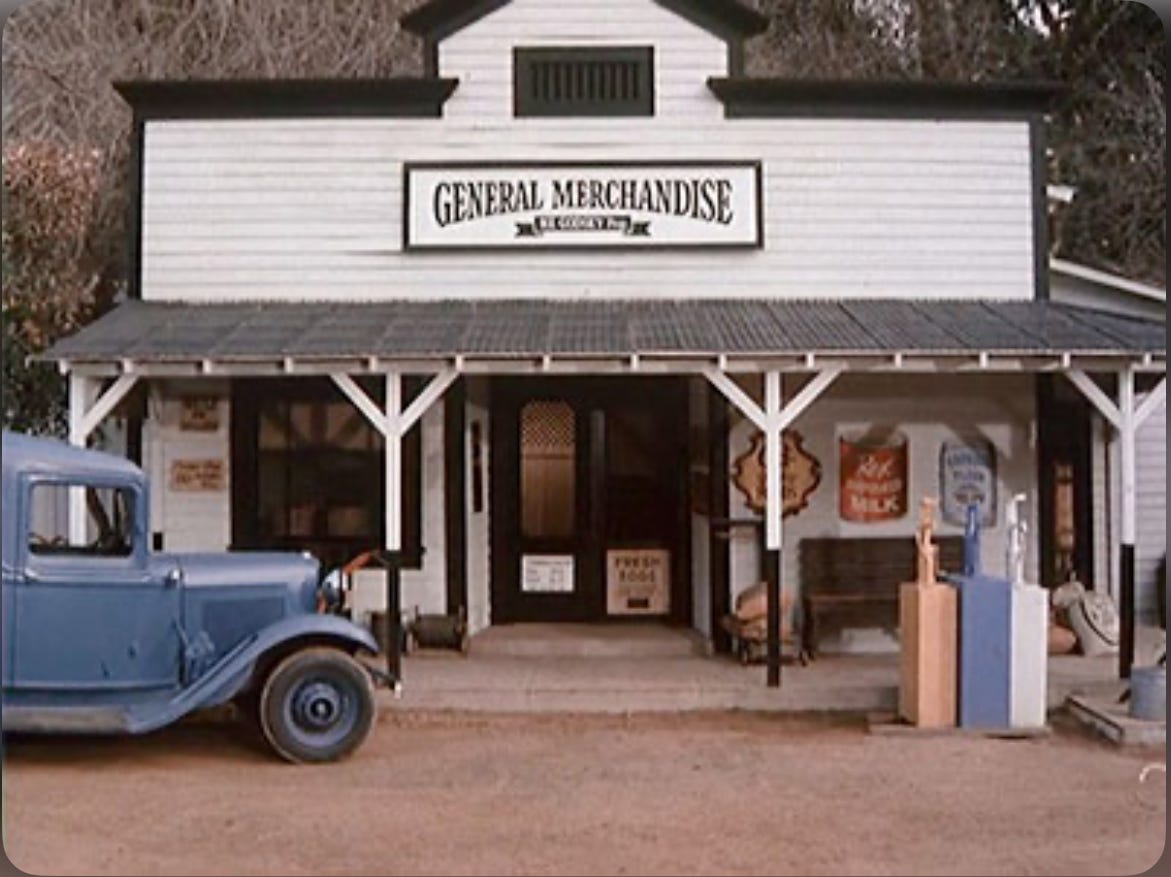
These are iconic places within collective American culture, and for good reason. The general store was, for many decades and more, central to the life of any small town America. There is something deeply American about the general store. In the early days of the settling of this country, trading posts existed at particular points across the raw, untamed lands west of the Mississippi. “Tao Pueblo was for years a favorite meeting and trading place of the Southwest. Here were held Trappers’ Fairs and everyone came- French and American trappers, or ‘Mountain Men’ Spaniards, and Indians of many tribes” (Holling Clancy Holling, Tree in the Trail). Just last week I read this to my seven year old daughter from Tree in the Trail:
At Independence, the head of the Trail, steamboats splashed up the muddy Missouri with new cargoes. Negroes carted bales and barrels to the stores. Those boxes of glassware, perfumes, cloth, food and hardware brought riches in the Santa Fe trade. And so merchants in silk hats bowed to silk-gowned ladies riding in polished carriages.
These trading posts and later general stores were the heartbeat of America. They served as not only the hub for bartering, trading, and shopping, but also for discourse between both neighbors and neighboring towns and states. As Holling describes it, “the stores buzzed like hives of bees.”
But as the world shifted and cars developed, interstates constructed, grocery stores built and later the mall, Walmart, and the internet became shiny and new, people abandoned local shops and with it, the culture it preserved. Disney made an entire movie about it, a movie that touched our hearts:
I used to watch that scene (1:15:00) about Radiator Springs in Cars and lament. It truly encapsulates the feeling of nostalgia so many are having as the modern, digital, fast-paced, and therefore isolated world has displaced what was once central to American life: that which is local, historical, and generational. The longing to restore those is good. And I’m hopeful it can be done.
What we restore won’t be exactly what Cars portrays, as much as we love the vintage cars, the classic music, the old smells; it’s not those physical things that we long for. At least I don’t think. They are only representations of what it is we’re missing. What we need is to return to the spirit of what the movie depicts.
So, instead of mourning the loss of the life we all feel has been lost to history, our family is determined to do something about resorting it.
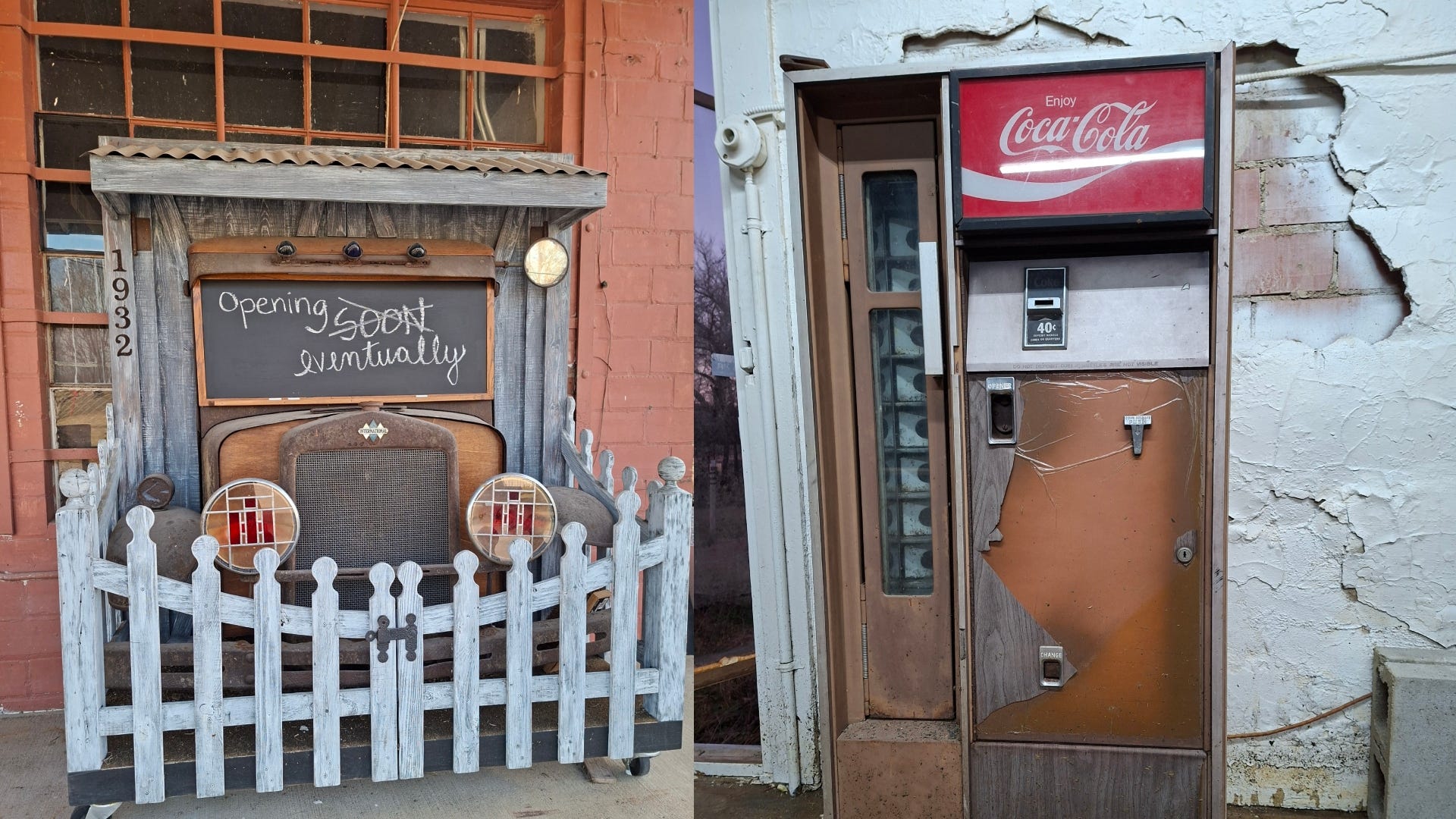
It’s not as though we lost something that must be buried and forgotten about. It’s as though we left something behind we thought we no longer needed. Now, slowly, thankfully, people are realizing that it’s not something we can just set on a shelf in a museum and visit periodically. It’s something that is actually quite fundamental to this nation. The roots of this country, the veins that transport its blood, the feeling of who we are is local, communal, personal, physical, provincial even. It connects both the daily lives of real people and the generations reaching back into our history. This isn’t as much about nostalgia and longing for the days of yore as it is about recognizing that we are poorer for not preserving something so central to America.
Jon Harris, who often talks about the urgency of recovering the local recently said,
If you want to preserve the way of life that has been passed down to you and expand on it and return to maybe things that even preceded your own birth, then you’re going to have to get involved in local associations. That’s where the community actually lives, breathes, exists… The only place that we have, the only tool available to restore any semblance of stability exists on the local level.
But you’re wondering when I’m going to answer the question: why did you buy a general store? I hope the above discussion gives you a glimpse into our reasoning, but I do want to cover a few specifics, divided into three categories that I mentioned above, before I conclude.
Local
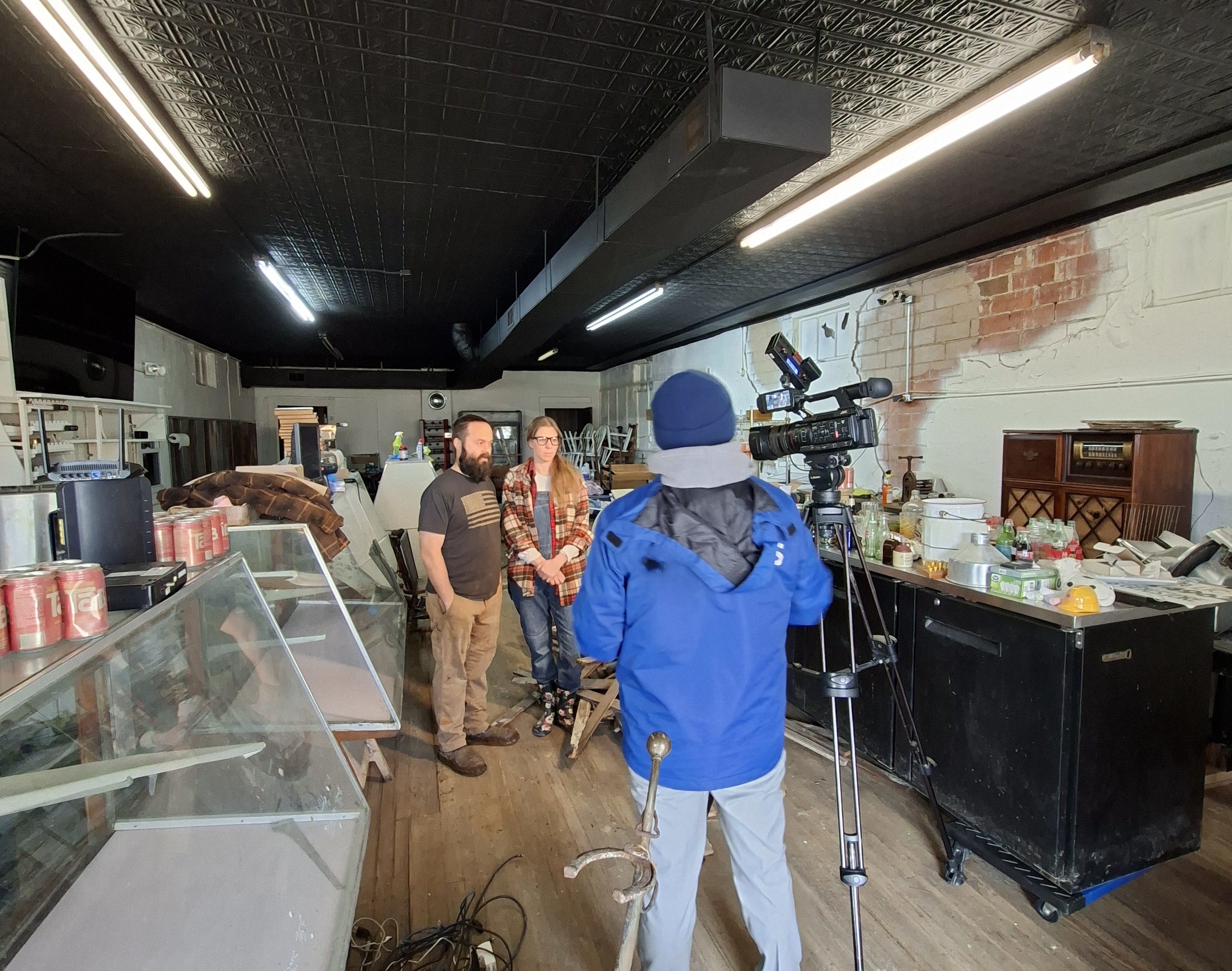
We truly believe that, as Jon Harris said in the above quote, the restoration of this nation and the preservation of the way of life that has been passed down to us (even if it still only exists in shredded pieces) happens primarily through reviving the local.
Us millennials carry within us fond memories of our time at the mall. It defined our generation. And that time at the mall, I think, was just another iteration of what trading posts and general store used to be; how merchants set up shop and for some reason, that’s where life took place. Commerce creates and connects community, not because money is the bottom line, but because it requires people to physically interact, connect, show up, and converse. It therefore establishes a natural place for relationships to develop and propagate.
The internet, as wonderful as many of its many benefits may be, has significantly eroded that. Not to the point that it’s disappeared, but we’re certainly on the way. Discourse on X, FB groups, Discord servers, and Reddit forums may masquerade as communities (Reddit even referring to itself as the home of “authentic human connection”), but deep down we all know such things, as helpful as they may be, can’t truly replace the inherent need within the human soul for physical community and relationship.
Our family, like many I’m sure, has recognized this and longs to restore the local so that we can restore community. We’ve lost community connection points all across the country. Church attendance has been on the decline for decades. Participation in local volunteer and service oriented groups has dipped. And general stores have all but disappeared. Sure, we can still plan to meet a friend at the local coffee shop for conversation over a hot drink, but the place down the road where we see one another regularly or serendipitously bump into neighbors and friends, the place that hosts community events like bingo night, parades, or barn dances, it’s been replaced with Netflix, Instacart, and online chat groups. We’d like to reverse that trend.
Historical
From the moment we moved into our town, I started to learn about her history and the history of her people. It’s a small farm town, a hamlet as my husband calls it, bordered by two rivers and boasts a rich history of farming- both agriculture and livestock, specifically pigs (the pigs not so much anymore).
Even the history of our house is linked to a family who ran a ferry across the Ohio river early on the 20th century. Ruins of an old river town where, as rumor has it, Lewis and Clark would have stopped on their way down the Ohio heading west, lay but a mile or so from our house.
We desire to help preserve the history of this place. I dream of a wall covered in photographs of the people and places who have and still do make up this area. I want to hear stories from the people in our area and pass them along to others, to keep the memories and the heart of this hamlet alive so that it can continue on for generations to come.
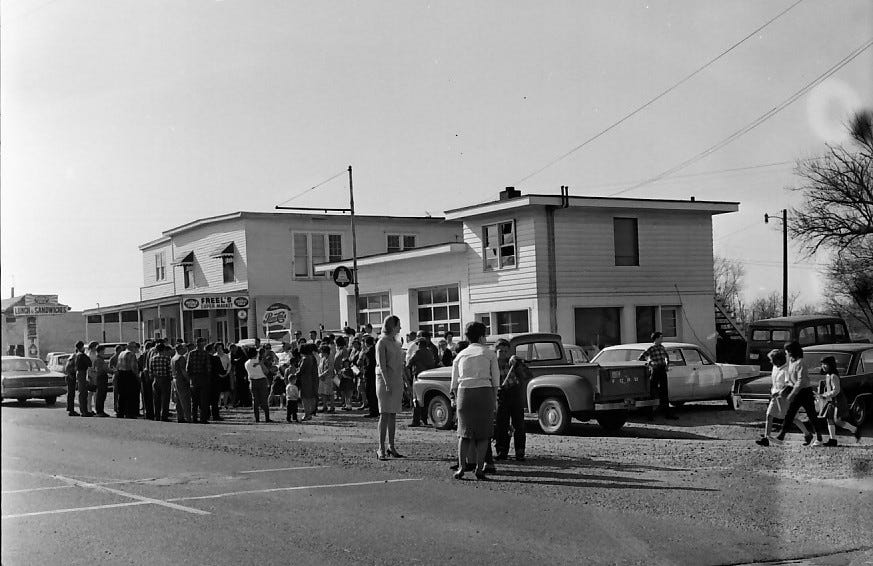
And it’s not just the history of this area we want to help keep alive. It’s also specifically small country stores in America. As I’ve been researching all of the general stores in our county (because there once were several) I’ve come to discover that many have one by one been purchased and converted from down home country store to run-of-the-mill gas station, smoke shop, convenience store peddling kratom and Indian cuisine. In small town, rural America, we are witnessing our distinctly American culture morph into something lifelessly ordinary as it is homogenized and absorbed into something far more international and global while ties to the past are entirely severed.
Multi-Generational
There is a reel that went viral on Instagram recently that said, “Telling kids to leave home at 18 is one of the most successful psyops of modern life… Here’s what they don’t want you to know: Families that stay together can build businesses, share costs and grow generational wealth. When the family unit breaks, each generation has to start from zero; financially, emotionally, spiritually. That’s not freedom. It’s a setup and it’s by design.”
One of the first conversations we had after the opportunity to purchase this store was presented to us was about our children. My husband immediately brought up that this would be a chance to build something that our entire family would be involved in and that, Lord-willing, we could pass on to them.
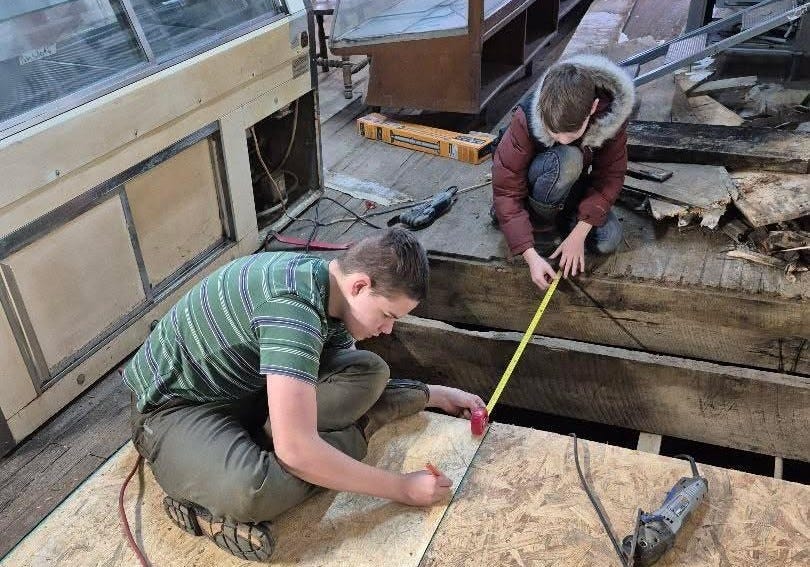
We’ve said for quite a while that it is a goal of ours that each of our five children have some sort of business they have established before going out from under our roof. In the not so distant past, households looked quite different than they do today. As I’ve written before:
It wasn’t as if there were dual incomes, but instead multiple streams of income into the one economy by what was produced under the one roof. We’re talking farming, production of household goods, etc. that were either grown, made, or developed for the family itself to keep, for the purpose of trade, or for sale.
We want to cultivate this economy in our own home; multiple streams of income including streams our own children contribute. What better way to do that than with a storefront where our children can both work and sell goods they themselves develop, make, and build?
And not only will our children work with us in the store, but my mother who last year moved to Kentucky to be two doors down from us (a quarter of a mile down the road), will also help in the operation of our fine retail establishment. That’s three generations working side by side.
Not to mention, we have two sons. They will, Lord willing, have households of their own one day and rather then set them up within the modern system of -go to college, get a job, seek out good benefits, and slave away for someone else their entire life- we strongly desire to establish something that will set them up to own their own business or company rather than depend entirely on another person or corporation and its success. It’s also no secret that in recent decades, finding work for a young white man has only become more difficult. We see this as an opportunity to avoid that possible dilemma.
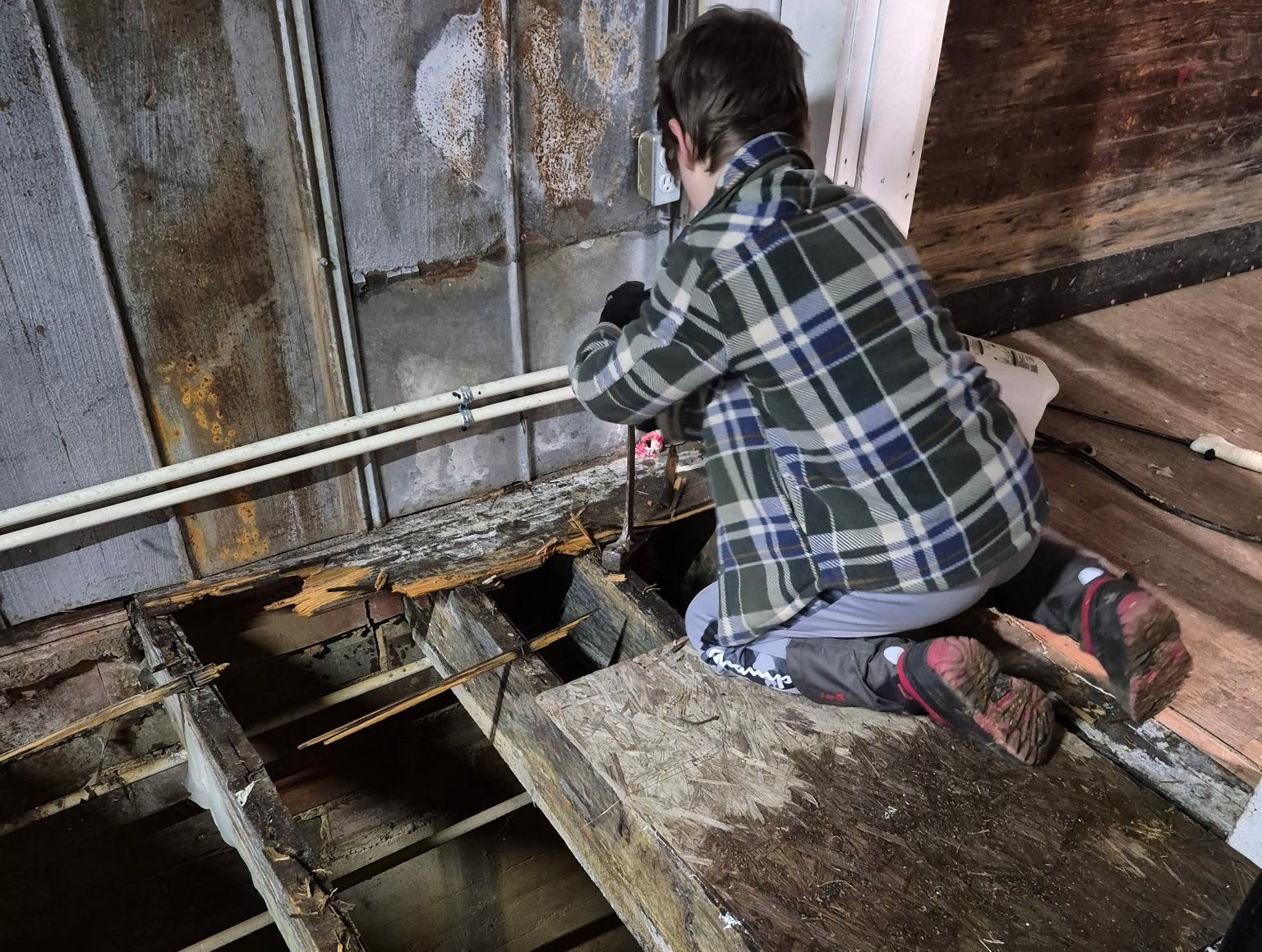
There’s also the matter of inheritance. We don’t have much to leave our children right now. But it’s our hope to follow the wisdom that Solomon left for us in Proverbs 13:22 when we wrote, “A good man leaves an inheritance to his children’s children.” And we aren’t interested in leaving money behind when we die. Instead we want to build something now, to build a culture, a family heritage, an investment in our children right now that will be securely carried on into the future in order to bless their children and their children and so on.
And so there’s your answer in 2000 words. I’m no master of brevity, and this honestly only barely skims the surface of the reasons why we feel so strongly that this is the right thing to do. For now, I’ll wrap this up with the same words I shared on a recent Instagram post:
Here's to small towns, close communities, physical stores, shopping local, tradition, heritage, history, and restoring all the best of America one little town at a time.
Stay tuned as I share updates along the way of our progress and eventual grand opening!
This is an idea worth spreading! We can start a general store revival with hamlets all over the country coming to life again.
What an incredibly amazing and exciting adventure your family is on, Jessi! I loved reading these stories this week, and look forward to following along as you prepare to "Open EVENTUALLY"!